Welcome
You’re
Visitor Number:
Now Accepting Students!
Chinese Combat
St. Michaels's Church
Marshlands Road
Neston CH64 4AD
Wednesdays 7pm
Sundays 8am
Ring/Text
07792350030
ianwingchun@outlook.com
Ages 14 years and over

Sifu Ian John McDonough
Sifu Ian John McDonough is the founder and head instructor at Chinese Combat. Since the club's beginnings, he has helped students grow in Learning Wing Chun, martial arts, confidence, and well-being and has always seen the club's students/members as friends.
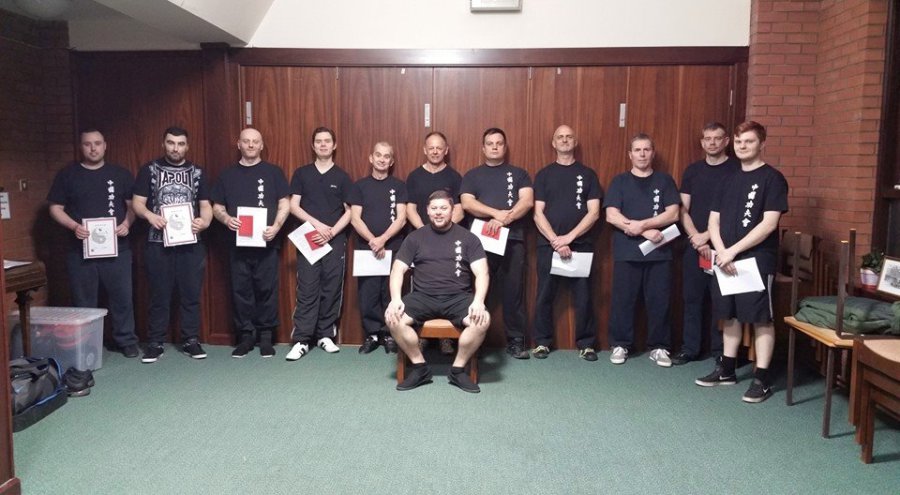
Born in Lancashire to a family of Irish heritage in the early 1980s, Sifu Ian's family moved around a few times before settling in Wigan, where he grew up. Rugby League was a must growing up, but Martial arts and weight training grew too, with Bruce Lee films being loved from an early age and Arnold Schwarzenegger being another hero. Like most kids, he did Karate, but in his early teens, he discovered Thai Boxing at a local gym and Jeet Kune Do. Although the other martial arts were excellent fun and very much enjoyed, when one day at the age of 18, his Thai Boxing club moved to another location, he followed. He noticed, among the other martial arts sharing the new venue, an advert for Wing Chun. He was excited about being able to learn the original martial art of Bruce Lee. To add to this fantastic discovery was the Wing Chun class's Sifu, teaching it; Ian was inspired by Master Tong Liu. Master Tong's personality and ability added to Ian's love of Wing Chun.
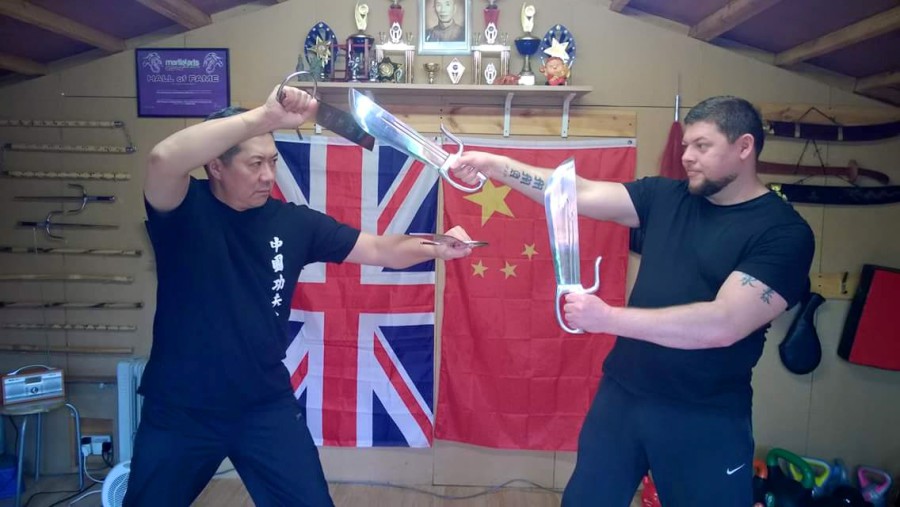
Sifu Ian and Master Tong Liu
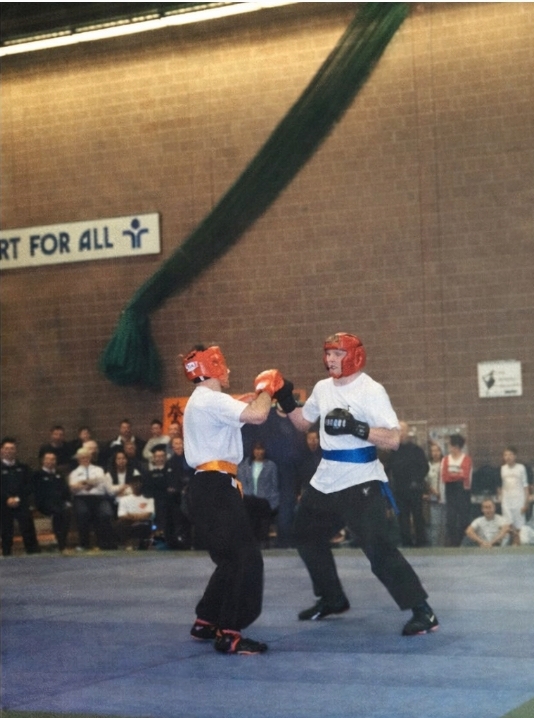
Sifu Ian Joined the Army and was in the Infantry but still came back to Wing Chun and Master Tong, learning all parts of Wing Chun's forms and the system, taking part in full contact fighting competition, becoming a barber and becoming the owner of a Barber shop with a Gym in for his own martial arts training and weight training and moving to the Wirral to start his young family.
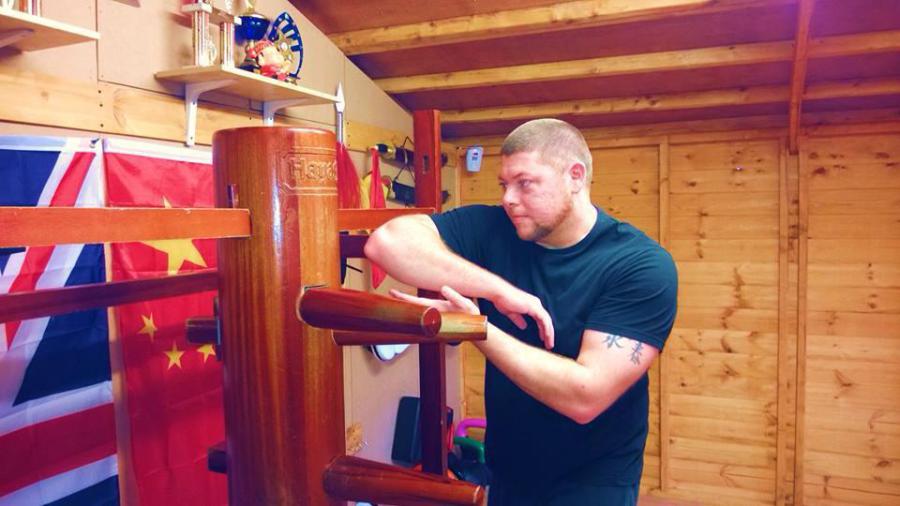
In 2012, Sifu Ian began teaching Wing Chun in Neston, Wirral. A year later, on 18th June 2013, Sifu Ian's Sifu, Master Tong, recognised and approved Ian as a senior instructor with the title of 'Sifu'. In 2016, Sifu Ian founded the Chinese Combat Association. Chinese Combat is still at the same location as he started teaching in 2012.
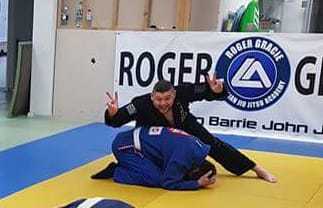
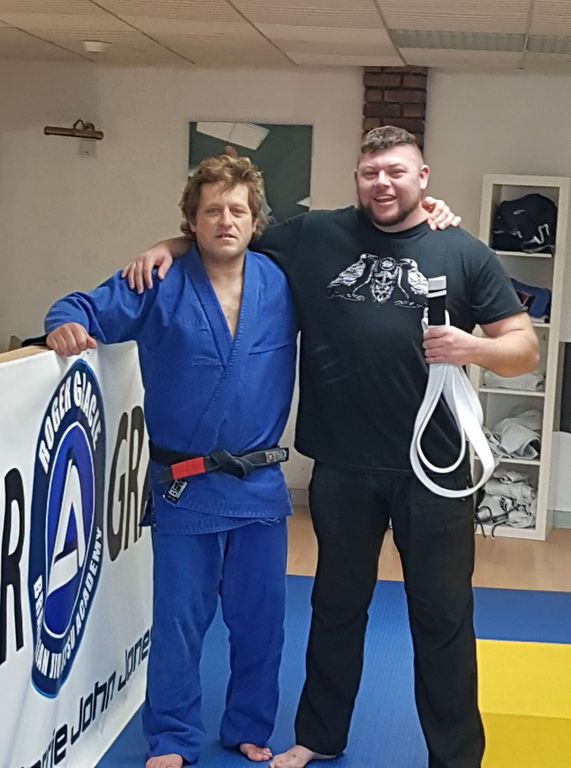
Sifu Ian John McDonough, besides his main base in Wing Chun, has also trained in other martial arts to varying degrees, including Thai Boxing, Jeet Kune Do, and Brazilian Jiu-Jitsu.
Our Clubs Lineage
Sifu Ian John McDonough was taught by Master Tong Liu.
Master Tong Liu was taught under Joseph Cheng, Ip Chun and Ip Ching.
Joseph Cheng was taught by Grand Master Lee Shing, who was taught by Great Grand Master Ip Man. Grand Masters Ip Chun and Ip Ching were also taught under Great Grand Master Ip Man and were also his sons.
The Wing Chun System
Renowned for its efficiency, precision, and direct approach. Designed to allow even a smaller person to defend themselves, through structure, timing and intelligent use of body mechanics rather than brute strength. Wing Chun emphasises centreline control, rapid hand techniques, close-range striking and sensitivity training such as Chi Sau to develop reflexes and adaptability. Levels of advancement are built around 'Forms', which act not only as a textbook but as a building block to advance practitioners. 3 barehand forms, a dummy form, a pole form and knives form create a backbone of traditional Wing Chun.
Let's look at them in order....
Sil Lim Tau. The first form of Wing Chun, meaning 'Little idea' or 'Small thought' is the most fundamental form of the Wing Chun system. It teaches the essential structure, positioning, and mechanics that underpin all Wing Chun techniques. Practised slowly and with great control, the form develops balance, relaxation, centreline awareness, and efficiency of energy. Through its simple yet precise movements, students learn correct hand shapes, elbow positioning, and how to generate power from stable body alignment. Sil Lim Tau is the foundation of Wing Chun, because every technique in the whole system grows from the principles contained within this form.
Chum Kiu. The second form, meaning 'Seeking the Bridge', focuses on how to connect with and control an opponent. Chum Kiu introduces coordinated body movement, turning, stepping, and the use of the hips to generate power. The form teaches practitioners how to close distance, maintain balance while moving, and redirect incoming force efficiently. Through its movements, students learn how to bridge the gap between themselves and an opponent while maintaining strong structure and centreline control.
Biu Jee, meaning 'Thrusting Fingers', is the third and most advanced barehand form of the Wing Chun system. It introduces emergency techniques used to recover structure, regain the centreline, and respond to situations where standard positions have been compromised. The form emphasises explosive energy, whipping power, sharp finger thrusts, elbow strikes, and rapid directional changes. Biu Jee teaches practitioners how to generate force from the body in short, decisive bursts while maintaining control under pressure. Often described as the form of recovery and advanced power, it builds upon the foundations of Sil Lim Tau and Chum Kiu to complete the core of empty-hand training of Wing Chun.
Muk Yan Jong, or Wooden Dummy form, is a key stage in the Wing Chun system that develops precision, positioning and practical application of techniques. Training on the dummy teaches practitioners how to refine angles, maintain correct distance, and apply Wing Chun movements with structure and control against a solid target. The form combines footwork, hand techniques, trapping, and striking sequences to improve coordination and timing. Rather than teaching new techniques, the Muk Yan Jong form helps sharpen skills already learned, building accuracy, resilience, and efficient body mechanics for close range.
Luk Dim Boon Gwun, or six and a half point pole form, is one of the traditional weapons forms of the Wing Chun system. Training with the long pole develops powerful body structure, forward energy, and precise control of distance. The techniques emphasise direct thrusting attacks, strong stance stability, and coordinated use of the whole body to generate force through the weapon. Although simple in appearance, the pole form builds tremendous strength, timing and alignment, reinforcing many of the core principles of Wing Chun such as efficiency, centreline control and focused power.
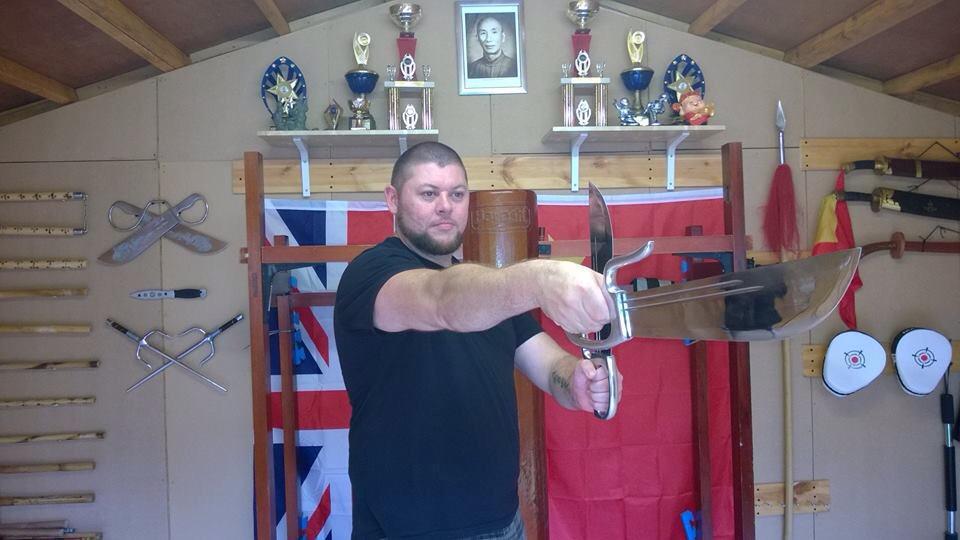
Baat Jaam Do, or Eight Cutting Knives form, is the traditional double knife weapon system of Wing Chun. It teaches powerful close-range techniques using paired blades, emphasising aggressive forward pressure, strong footwork and decisive cutting angles. The form develops coordination between both hands while reinforcing key principles such as simultaneous attack and defence. The Knives become an extension of the open-hand techniques and concepts built earlier.
What to expect from your traditional Wing Chun training
Beyond the Traditional forms, a Wing Chun student learns a wide range of practical fighting skills and training methods that build timing, sensitivity, structure and real combat ability. Think of the forms as the blueprints, while the rest of the training turns those blueprints into a working machine.
Striking Techniques
Students learn direct, efficient strikes designed to overwhelm an opponent quickly. These include the famous chain punches, palm strikes, finger strikes, elbow strikes, low-level kicks, knee strikes and even shoulder strikes and the use of the head and body as a whole. Wing Chun uses defensive wedging and deflection shapes/techniques, and attack and defence often happen simultaneously.
Chi Sau (Sticky Hands)
A Unique part of Wing Chun training is Chi Sau, or sticky hands. This partner drill develops reflexes, sensitivity, and the ability to feel an opponent's intention through contact. Rather than relying solely on sight, the practitioner learns to respond instinctively and quickly through touch and pressure. Chi Sau is also a laboratory for Wing Chun techniques to be played with and tested.
Footwork and Positioning
Students practice stepping, turning, and angling to control distance and balance. Proper footwork keeps the body stable while allowing quick movement forwards, sideways and at angles to dominate and even uproot an opponent, destroying their structure.
Trapping and Control
Wing Chun specialises in trapping techniques, where the practitioner pins, redirects, or briefly immobilises an opponent's arms to create openings for strikes. These skills help maintain pressure and prevent the opponent from launching effective attacks.
Close-Range Fighting
Wing Chun excels at very close-range combat. Students train to fight efficiently when space is limited using short power, elbows and rapid combinations. This makes it particularly effective in confined environments.
Conditioning and Structure
Training also develops body structure and alignment, so power can be generated without relying on strength. Drills strengthen the stance, improve coordination, and teach the body to remain relaxed yet ready to explode with energy.
Sparring and Application
Students practice controlled sparring and application drills, and striking practice both on and off pads. This allows them to apply techniques under pressure and develop timing, distance control, and real fighting awareness.
In essence, the forms teach principles, but the partner drills, striking practice, and sparring turn those principles into living skills. A Wing Chun student learns not just techniques, but a whole system of movement, reaction, and strategy for close-quarters combat,
 Print
Print 