Welcome
You’re
Visitor Number:
Now Accepting Students!
Chinese Combat
St. Michaels's Church
Marshlands Road
Neston CH64 4AD
Wednesdays 7pm
Sundays 8am
Ring/Text
07792350030
ianwingchun@outlook.com
Ages 14 years and over

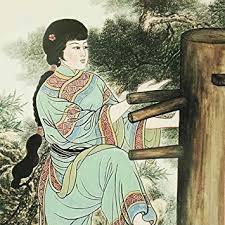
Ng Mui & Yim Wing Chun
Qing dynasty
During the Qing dynasty, Ng Mui, a Buddhist Nun and one of the legendary five elders who survived the destruction of the Shaolin temple, retreated into the mountains with the monks to refine her understanding of martial arts.
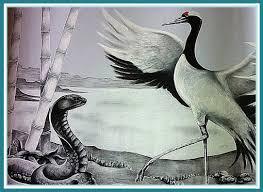
While alone in the wilderness, she observed a snake and a crane fighting. Observing the crane's nature of precision over brute force and its efficiency defending itself against a snake, she developed a system built on structure, timing and intelligent economy of motion rather than size or strength.
Some time later, Ng Mui came across a girl called Yim Wing Chun. Yim was being forced to marry a local warlord against her will. Ng Mui convinced Yim to learn her new system to defend herself and free herself from her unwanted marriage. Yim proposed a deal to the warlord that if she could defeat him in combat, she would be free again. After defeating the warlord, Yim was free to marry a man of her choosing, whom she taught the new system to. The System, now named Wing Chun after Yim by Ng Mui, was passed down and further developed.
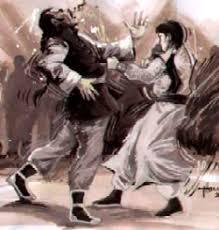
The Red boat opera eara
1700s - early 1800s
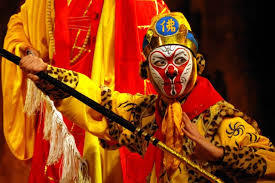
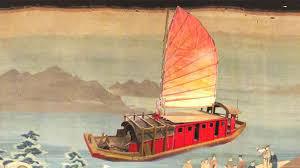
During this time, Wing Chun was preserved and developed among travelling performers who lived and worked aboard distinctive 'Red Boats', floating theatres that moved along the rivers of southern China. Training and passing on the close-range skills in the tight quarters of the boats, a highly practical fighting method evolved.
It was during this period that key figures such as Leung Yee Tai and Wong Wah Bo helped shape and transmit the art that would be passed to Leung Jan of Foshan, ensuring Wing Chun survived beyond the secretive world of the boat performers into the modern era.
Foshan Mid 1800s - 1900s
From the 1800s onward, Wing Chun quietly took root in the bustling market town of Foshan in Guangdong province, a place famous for its martial arts, opera culture, and skilled craftsmen, preserved within small family circles and among trusted students. One of the most important figures of this period was Leung Jan, a respected herbal doctor known as the 'King of Wing Chun' who taught a select group of disciples in Foshan.
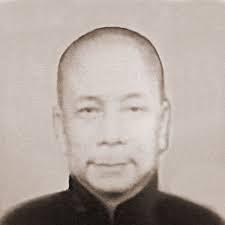
Leung Jan 'King of Wing Chun'
Among those who carried the system forward was Chan Wah-Shun, who later became Ip Man's teacher. During this time, Wing Chun was still relatively secretive, taught privately rather than publicly.
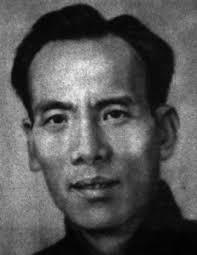
Chan Wah-Shun teacher of Ip Man
Ip Man 1940s - 1970s
In 1949, Ip Man moved from Foshan to then British Hong Kong after the upheaval of the Chinese civil war. In Hong Kong, he began teaching Wing Chun publicly for the first time. In the crowded rooftop schools and union halls, his practical, direct fighting method attracted many students.
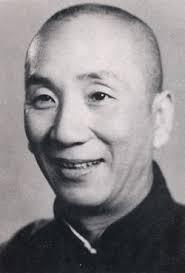
One student of this era was the future martial arts legend, Bruce Lee. Ip Man's teachings between the 1950s and 1970s helped spread Wing Chun internationally. By the time of his passing in 1972, many of his students had begun establishing schools around the world, ensuring that the art would grow far beyond its roots in southern China.
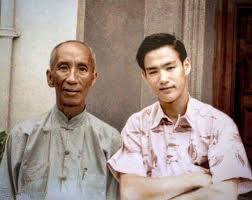
Ip Man & a young Bruce Lee
Global expansion 1980s - 2000s
Wing Chun's international explosion was due to Ip Man's students carrying the System to North America, Europe, Australia and beyond. Figures such as William Cheung, Leung Ting, Wong Shu Leung, Leung Sheung and Lee Shing helped establish schools across the world, each presenting their own interpretations of the system
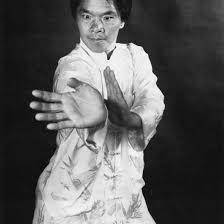
William Cheung 1980s
Wing Chun was further fueled by the enduring influence of Bruce Lee through films, books and magazines. Seminars connected practitioners internationally, and the emergence of the internet allowed Wing Chun to grow into one of the most widely practised Chinese martial arts in the world.
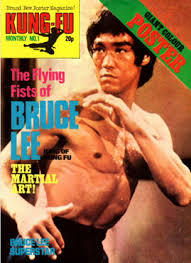
By the early 2000s, clubs and associations could be found across dozens of countries, creating a truly global Wing Chun community.
Modern combat and cross-training
2000s - Present
The rise of mixed martial arts competitions, particularly organisations such as the Ultimate Fighting Championship, encouraged many Wing Chun practitioners to test and adapt their skills alongside boxing, wrestling, Brazilian jiu jitsu and Muay Thai. This period saw a growing emphasis on integrating Wing Chun principles, such as centreline control, trapping, and close-range striking, into a more dynamic fighting environment. Today, Wing Chun exists as both a respected traditional Kung Fu system and as a living martial art that continues to evolve. Wing Chun has affected the modern world of combat and entertainment media, with films about Ip Man, films featuring Wing Chun, and Wing Chun techniques and principles on display at the highest level of MMA.

Alex Pereira, Jon Jones, Tony Ferguson, Anderson Silva, and Conor McGregor have all shown use of Wing Chun in high-level combat.
Looking to the Future
Some Wing Chun schools have stuck purely to traditional methods of teaching Wing Chun, others have abandoned tradition and just focused on a modified style mixed with other non Wing Chun martial arts styles, techniques and principles. Here at Chinese Combat, we keep tradition with the full Wing Chun system on offer for students as well as Combat Wing Chun, incorporating Wing Chun, Boxing, Grappling, Thai/Kick Boxing and other components of other martial arts. This offers the original fascinating beauty and structure of pure Wing Chun and a modern combat system. We are very lucky and honoured to be able to bestow all 3 barehand forms, the dummy form, pole form and the knives form with all their riches, teachings, alongside a mix of all-around combat capability for our valued students.
 Print
Print 